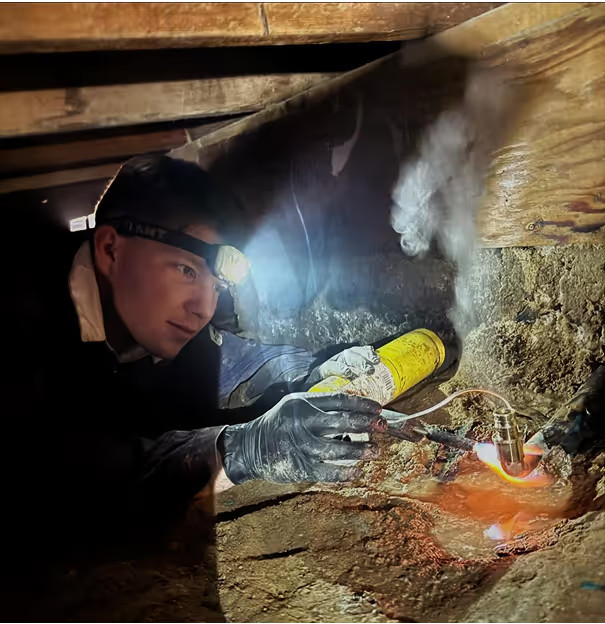


Finding a leak should not mean opening walls or breaking concrete on a guess. Plumb Guild starts with the least invasive method that will locate the source. Acoustic sensors pick up the sound of water escaping a pressurized line, thermal imaging reveals temperature changes behind drywall and under flooring, and moisture meters confirm how far water has traveled. By the time we recommend a repair, you know exactly where the leak is and how large the opening needs to be. That means less demolition, lower repair cost, and a faster return to normal.
Anaheim sits on some of the harder water in Orange County, around 18 grains per gallon, and that mineral load scales and corrodes copper supply lines from the inside over time. Pair that with a housing stock where many homes were built slab-on-grade between the 1950s and 1970s, and you get a large number of properties with aging copper running under the foundation. That combination is why pinhole leaks and slab leaks are common here, often in homes that have never had a plumbing problem before. We account for this directly: on older Anaheim homes we check the supply lines most likely to corrode first and use line tracing to find the specific failure point rather than assuming where it is.
The cost of a leak is rarely the leak itself. It is the mold behind the wall, the damaged flooring, the inflated water bills, and the foundation issues that build while the leak stays hidden. Catching it early keeps a small repair small. If you have noticed a musty smell, staining on drywall, or a water bill that does not match your usage, those are signals worth acting on now. We explain what we find in plain terms and give you a clear next step, with no pressure to do more than the situation calls for.